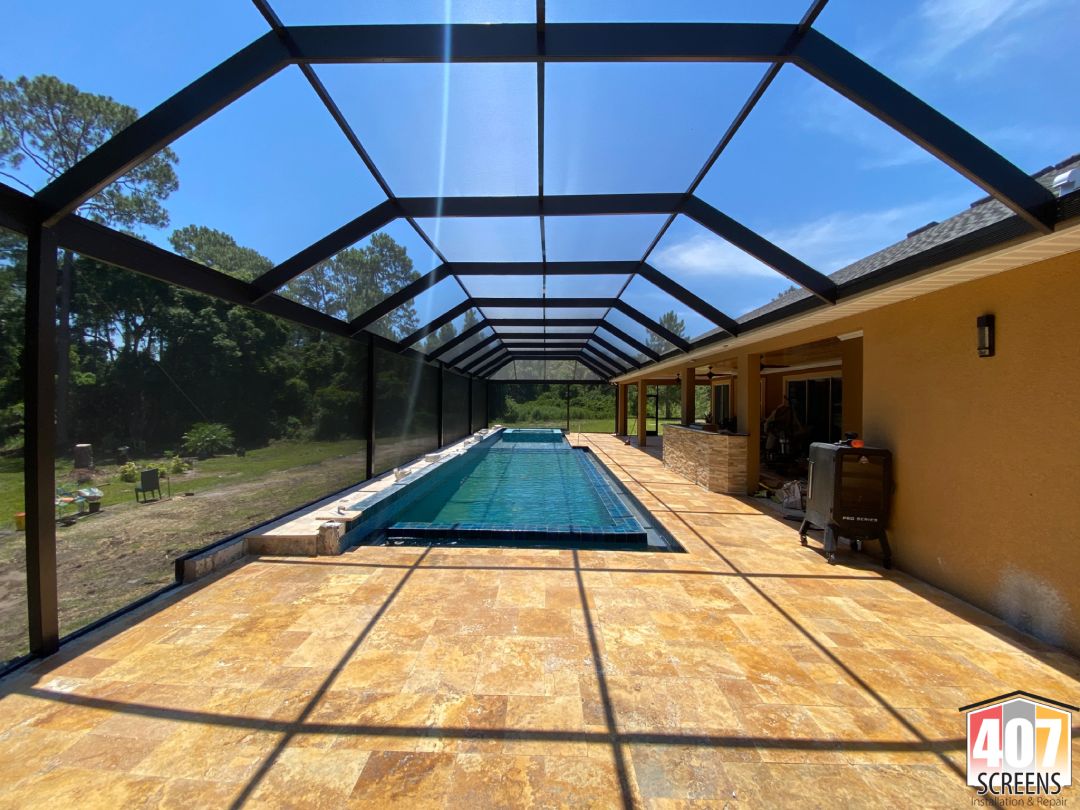
Florida pool enclosures are engineered to withstand high wind velocity, but regular maintenance, fastener inspections, and proper mesh tension are critical before storm season hits Central and South Florida.
1. Inspect Tapcons and Aluminum Fasteners
The primary failure point in aging pool enclosures isn't the aluminum beams—it's rusted or degraded base screws (tapcons) anchoring the structure to your concrete pool deck. If fasteners show orange rust or galvanic corrosion, replace them with 304 or 316 stainless steel coated tapcons immediately.
2. Check Spline Tension and Torn Mesh
Spline is the rubber vinyl bead that holds screen fabric tight inside aluminum framing channels. Over time, Florida’s intense UV radiation dries out vinyl spline, causing mesh to sag. Sagging mesh catches turbulent wind gusts like a sail, putting unnecessary rotational force on corner aluminum purlins.
Professional Tip:
Upgrading to heavy-duty Super Screen or genuine 18x14 / 20x20 Phifer mesh provides up to 300% higher puncture resistance compared to standard builder-grade mesh, allowing extreme storm winds to pass safely through without ripping aluminum framing.
3. Clear Drainage Gutters & Trim Overhanging Trees
Ensure the "super gutter" connecting your screen room or pool cage to your roofline is completely clear of oak leaves and pine needles. Backed-up water during tropical downpours can add hundreds of pounds of unnecessary dead weight to aluminum brackets.
Need a Free On-Site Storm Inspection?
407 Screens inspects anchors, replaces storm-damaged panels, and installs Florida wind code certified pool cages across Orlando, Kissimmee, Clermont, and Central FL.